


If you have dry eye, you’re likely familiar with the discomfort of gritty, scratchy, or burning sensations. You might also wonder if wearing contact lenses is just not an option. Many people with dry eye symptoms can find a way to wear contacts comfortably, but it often requires a proper contact lens fitting and professional guidance.
The good news is that for many people, wearing contact lenses with dry eye is possible with the right type of lens and a proper care routine.
What Causes Dry Eye?
Your eyes rely on a consistent layer of tears to stay moist, clear, and comfortable. When something disrupts this tear film, dryness can occur. Since contact lenses are placed on this tear film, any imbalance can cause lens wear to feel uncomfortable, resulting in burning or scratching sensations.
Problems with Tear Production
Sometimes, your eyes may not produce enough of the watery part of your tears, which is essential for keeping your eyes properly lubricated. This lack of production can lead to a constant feeling of dryness. Contact lenses can sometimes make this feeling more noticeable.
Tears That Evaporate Too Quickly
Your tears have an oily outer layer that prevents them from drying up too fast. If the tiny glands that line your eyelids get blocked, you may not have enough oil in your tears. This causes them to evaporate quickly, leaving your eyes exposed and feeling dry.
Signs Your Contacts Contribute to Dryness
It’s common for contact lenses to feel less comfortable as the day goes on, but for those with dry eye, the symptoms can be more frequent and more uncomfortable. Ignoring these feelings can lead to more significant issues, so understanding proper lens safety is crucial. Here are some common symptoms to be aware of:
- A gritty or sandy feeling, like something is in your eye
- Redness and irritation
- Blurry vision that seems to clear after you blink
- Increased awareness of the lenses in your eyes
- A desire to take your lenses out earlier than usual
Best Contacts for Dry Eye
Several types of contact lenses are designed with materials that help retain moisture, making them a good option for people with dry eye symptoms. Your optometrist can help you find a suitable match for your unique needs.
Lenses with High Water Content
Some modern soft contact lenses are made with materials that hold a significant amount of water. This can provide an initial cushion of moisture for comfortable wear. The right material is key, and our team can help you explore a wide selection of specialized lenses to prevent them from drying out throughout the day.
Silicone Hydrogel Lenses
These lenses allow more oxygen to pass through to your eye than traditional soft lenses. This increased breathability can help with long-term use. It can also make them more comfortable for all-day wear.
Daily Disposable Lenses
A fresh pair of lenses every day helps to eliminate the buildup of deposits that can irritate your eyes and contribute to dryness. This makes them a simple option for those seeking something with less maintenance.
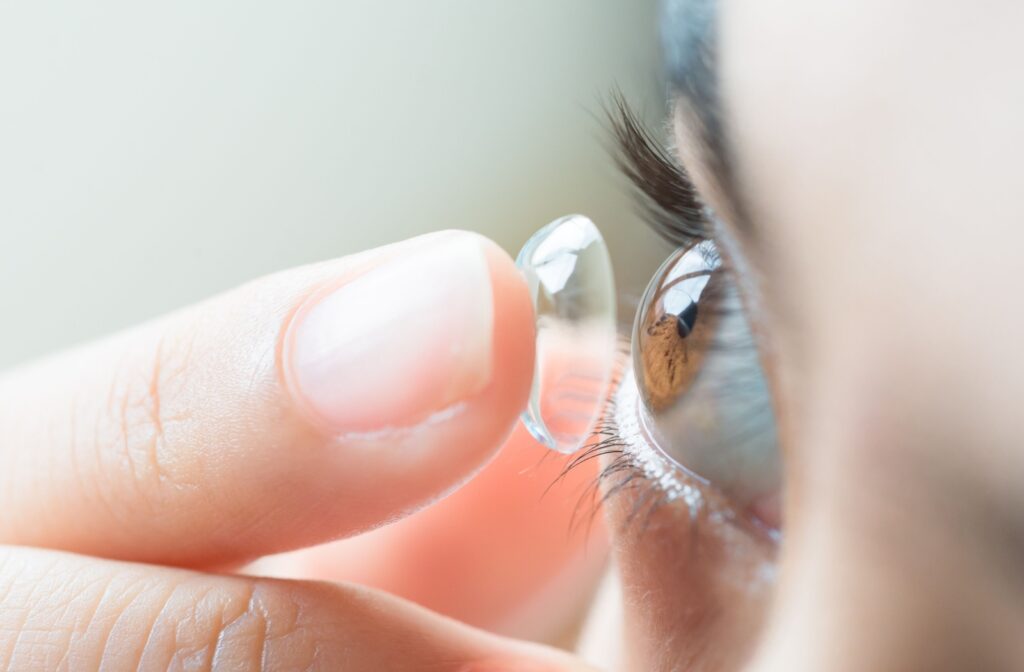
Tips for Contact Lens Wear
Beyond choosing a different type of lens, simple, everyday habits can significantly impact how your eyes feel. You can incorporate these tips into your daily routine to keep your eyes hydrated while wearing contacts.
Use Contact-Safe Eye Drops
Not all eye drops are right to use with contact lenses. Use rewetting drops formulated specifically for contacts to help refresh your eyes throughout the day. A preservative-free option may be a good choice if you use them frequently.
Follow the 20-20-20 Rule
When you’re on a device, you tend to blink less, which can cause your eyes to dry out. Practicing the 20-20-20 rule can help with short and long-term eye health. Every 20 minutes, take a 20-second break to look at something at least 20 feet away. This simple habit is easy to implement, and it gives your eyes a much-needed rest.
What to Do If Your Lens Feels Stuck
If your eye is too dry, a contact lens can occasionally feel stuck. Part of proper lens wear and care is knowing how to handle this. Do not try to pull it off when it feels dried out. First, wash your hands, then apply contact-safe rewetting drops to rehydrate the lens and your eye. Blink a few times, and the lens should move freely, allowing you to remove it normally.
When to See Your Optometrist in Vaughan
While these tips can help, the most effective way to manage dry eye with contact lenses is to seek a professional evaluation. A comprehensive eye exam can help to identify the root cause of your dryness and lead to a personalized solution that works for you.
An optometrist can do more than just check your prescription. We can assess your tear film, examine your eye health, and recommend specific contact lens brands suited to your needs. A proper fitting set of contact lenses could be the first step in battling dry eye.
For persistent dry eye, there are several in-office treatments available that can help. For example, some procedures can unblock the oil glands that line your eyelids. This can improve your natural tear quality and make wearing contact lenses more comfortable.
You don’t have to guess what might help you with clearer, more comfortable vision. If you’re struggling with contact lenses, a conversation with one of our optometrists in Vaughan can help you find a solution that works for you. At Lowy & Sewell Eye Care, we’re here to talk with you about the options. Book your appointment with us today.