


Key Takeaways
- Myopia in children tends to worsen as they grow, which increases some long-term eye health risks if left unmanaged.
- Low-dose atropine eye drops can slow how quickly myopia progresses, though they don’t correct vision on their own.
- Kids still need glasses or contact lenses alongside atropine treatment.
- Side effects at low doses are typically mild and well-tolerated.
- Regular eye exams with an optometrist help track progress and guide treatment decisions.
What Myopia Means for Your Child’s Vision
Myopia (also known as nearsightedness) affects more and more children every year. It often appears between ages 6–7, and it tends to get worse as the child grows. When myopia is unmanaged, it sometimes progresses to high myopia, which raises a person’s risk of developing more serious eye health concerns later in life.
One common option for myopia control is atropine eye drops, which work by slowing down the rate at which the eye grows longer. If your child has myopia or if they show signs of blurry vision, our team at Lowy & Sewell Eye Care is here to help you protect their future vision.
What Atropine Eye Drops Do
How They Work in the Eye
Atropine eye drops work by slowing axial (front-to-back) growth of the eye. Because myopia is caused by the eye growing too long, slowing down front-to-back growth of the eye decreases the rate at which myopia gets worse.
It’s important to understand that atropine only slows myopia down. It doesn’t improve your child’s vision, so they’ll still need to wear glasses or eye drops.
How Atropine Eye Drops Are Used
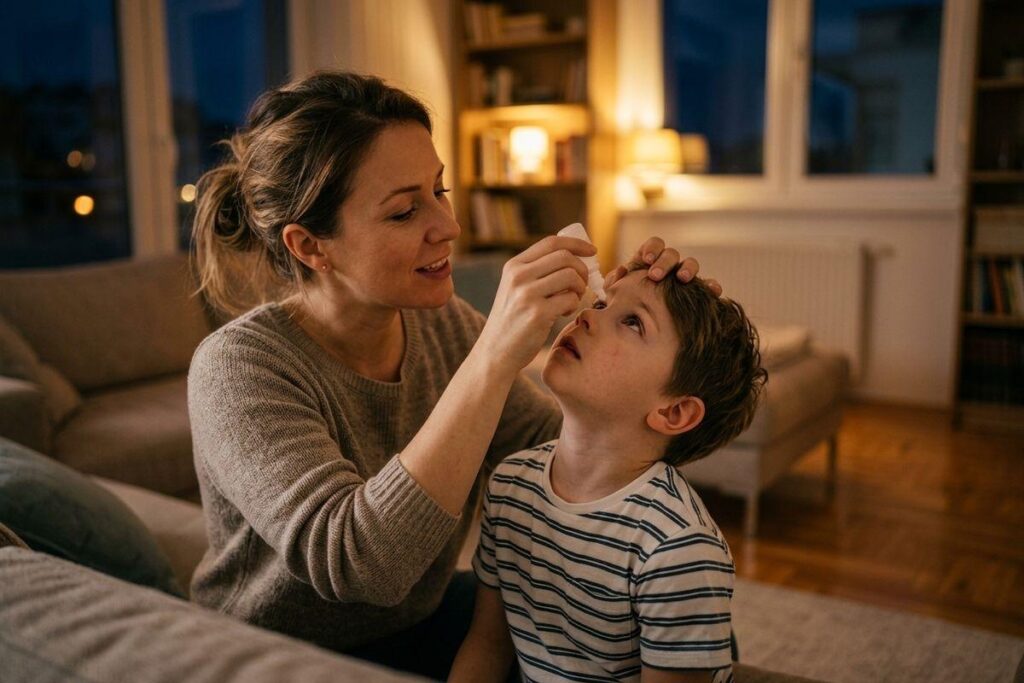
You apply atropine eye drops once per eye, just before your child’s bedtime. Atropine used for myopia control is normally at a low concentration, between 0.01% and 0.05%. These low-dose drops must be specially prepared by a compounding pharmacy because they are not available as commercially manufactured eye drops.

What to Expect from Atropine Treatment
Results Parents Often See
Research on low-dose atropine eye drops has shown that they can significantly slow the progression of myopia. This doesn’t mean that the treatment stops myopia completely, but it can make a meaningful difference in how strong a child’s prescription ends up.
Starting earlier tends to yield better results. Your optometrist can track your child’s progress with regular prescription checks and eye measurements and adjust the treatment plan as your child grows. You can learn more about how myopia progression changes with age to better understand what to expect over time.
How Long Does Treatment Typically Last
Atropine is generally used while the eye is actively growing, and has been shown to work for children between the ages of 4–14.
Side Effects and Safety for Kids
Low-dose atropine is generally well-tolerated. At concentrations like 0.01%, most children experience little to no noticeable side effects. Some kids do notice mild light sensitivity or slight redness, particularly in the first few days of use, though this tends to settle down.
Still, it’s important to store the drops securely out of reach of young children. Like any medication, proper storage matters for keeping everyone in your household safe.
If you have questions about what to expect during the first few weeks of treatment, our team at Lowy & Sewell Eye Care can walk you through the details at your child’s appointment.
Other Ways to Support Your Child’s Eye Health
Lifestyle Habits That Help
Atropine works best as part of a broader approach to your child’s eye health. Spending more time outdoors has also been associated with slower myopia progression, with more time spent outside having more of an effect.
Limiting long stretches of screen time also supports healthier eye development. Short breaks every 20 minutes or so during close-up tasks can give the eyes a chance to relax.
When to Talk to an Optometrist in Vaughan
If your child is squinting at the board, sitting closer to the TV, or mentioning blurry distance vision, that’s a good signal to book an eye exam. Early diagnosis means earlier options for managing myopia before their prescription climbs significantly.
Regular eye exams allow your optometrist to catch changes before they become more significant. Our care team at Lowy & Sewell Eye Care can review your child’s eye health, track how their prescription is changing, and walk you through whether atropine is a suitable option for your family. Reach out to book an appointment and get a clearer picture of where your child’s vision stands.