


Key Takeaways
- Dry eye happens when your eyes don’t make enough tears or your tears evaporate too quickly.
- Dry indoor air, especially in winter, can leave your eyes feeling uncomfortable.
- A humidifier may help ease dry eye symptoms by adding clean moisture to the air.
- Aim for indoor humidity between 30% and 55%.
- Simple habits like blinking more and using warm compresses can support comfort.
- If symptoms continue, the optometrists in Vaughan at Lowy & Sewell Eye Care can create a personalized plan.
The heat comes on for the season, and you settle in on the couch with a book. Within an hour, your eyes feel gritty and tired, and you keep rubbing them between chapters. Moments like this are a familiar part of the colder months, and our team at Lowy & Sewell Eye Care hears about them often from families around Thornhill, Vaughan.
Yes, a humidifier can help ease dry eye symptoms by adding moisture to the air in your home, especially when your heating runs often. It’s one helpful piece of the picture. If your eyes still feel uncomfortable, the dry eye therapy services at Lowy and Sewell Eye Care can help you find longer-term relief.
What Is Dry Eye?
Dry eye is a condition that affects the balance and health of the tear film and surface of the eye. It can happen when tears are unstable, evaporate too quickly, or don’t provide enough moisture. This can lead to irritation, inflammation, and damage to the eye’s surface, as well as changes in how the eyes sense discomfort.
Symptoms are often mild, but they can still feel frustrating. They can pull your attention away from a work project, a long drive, or a movie night with your family.
Common Signs of Dry Eye
Dry eye can show up in different ways, and you might notice one or several of these signs:
- Your eyes feel sore, burning, or scratchy.
- Your eyes look red, or your vision turns blurry.
- Your eyes water more than usual.
That last sign surprises many people. Watery eyes can be a sign your eyes are dry.
How Dry Air Can Affect Your Eyes
You’ve probably felt the change when the furnace kicks on in the fall. Winter heat, especially from forced-air systems, dries out the air inside your home. Your eyes might feel irritated and scratchy, and they may even start to water at odd moments.
Conditions outside your home play a role too. Windy, dry, or smoky spaces may increase tear evaporation, so a breezy walk or an evening by a backyard fire can leave your eyes feeling scratchy.
Humidifiers and Dry Eye Relief
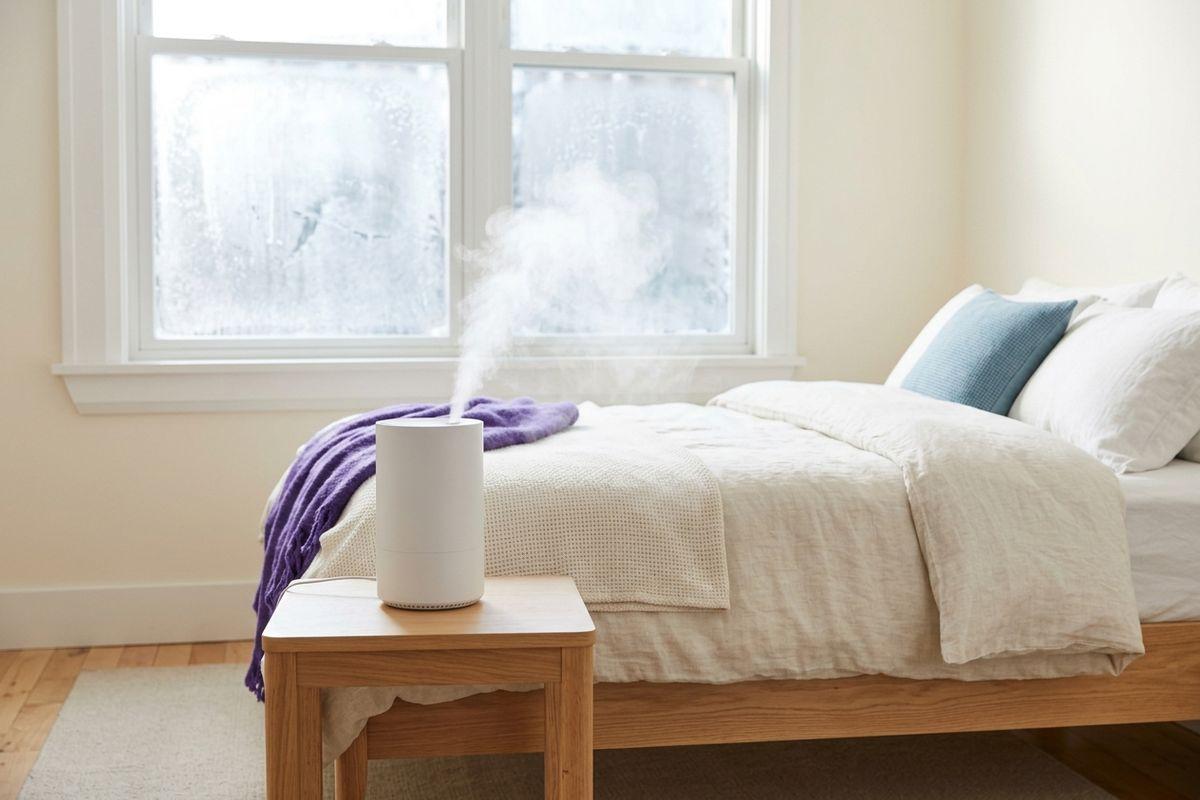
Adding moisture back into your home can make a noticeable difference. Moist, clean air may ease your dry eye symptoms. A humidifier is especially helpful during winter, when your heating runs often.
Target Humidity Levels for Your Home
Aim to keep your indoor humidity between 30% and 55%. A small, low-cost tool called a hygrometer can show you the current level at a glance.
Balance matters. Too much moisture can leave windows foggy and rooms feeling damp, so keep the level within this range instead of running your humidifier nonstop.
Humidifier Types to Consider
The right choice depends on your home and your routine, and here are two common options:
- A whole-home humidifier works with your heating system to add moisture throughout your house.
- A portable unit can sit in the rooms you use often, like your bedroom or home office.
Whichever you pick, clean it regularly so the air it releases stays fresh.
Other At-Home Tips for Dry Eye Relief
A humidifier pairs well with a few small changes to your day.
Simple Daily Habits
These easy habits can help your eyes feel more comfortable:
- Blink more often, especially while you work at your computer.
- Take regular breaks from screens to rest your eyes.
- Apply a warm compress to your closed eyelids.
A sticky note on your monitor reading “blink” might feel silly. However, it’s an easy reminder during a busy afternoon.
Lifestyle Changes
Your overall routine can affect how your eyes feel, and a few changes are worth trying:
- Keep good sleep habits and eat a healthy, balanced diet.
- Cut back on alcohol and caffeine.
- Try daily disposable contact lenses, or wear your glasses more often.
Dry Eye Care
Home care can go a long way, but sometimes your eyes need more support. The optometrists in Vaughan at Lowy & Sewell Eye Care can look closely at your symptoms and suggest options to fit your daily life.
Treatment Options for Long-Term Comfort
Dry eye treatment is not one-size-fits-all. Depending on your symptoms and needs, our team may recommend one or more of the following options:
- OptiLight by Lumenis: Light-based therapy that helps address inflammation associated with dry eye.
- LipiFlow: Uses gentle heat and pressure to unclog oil glands and improve tear quality.
- Scleral lenses: Special contact lenses that create a protective layer of moisture over the eye.
- Punctal plugs: Help keep tears on the eye’s surface by slowing their drainage.
- Amniotic membranes: Help promote healing and reduce inflammation on the eye’s surface.
- Everyday dry eye care: Includes eyelid hygiene, omega-3 supplements, artificial tears, and prescription eye drops to support tear quality and eye health.
Our team will recommend an approach based on your individual needs.
When to Book an Eye Exam
Consider booking an appointment if any of these situations sound familiar:
- Your symptoms continue despite home care and a humidifier.
- Dry eyes affect your work, screen time, or sleep.
- You’d like a personalized care plan from the team.
Find Relief Today
A humidifier can make your home feel more comfortable this winter, and our team at Lowy & Sewell Eye Care can help with the rest. Book an eye exam today to talk about your symptoms and find a plan to help your eyes feel fresh and comfortable through every season.